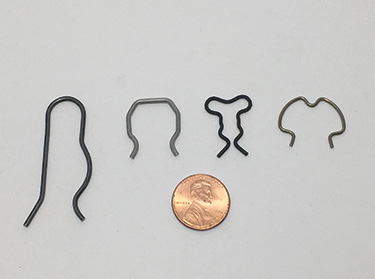
Material, Spring & Finish Decisions Behind Wire Form Performance

This guide expands on the wire-form topics that usually matter after the part function is understood but before the final production path is settled.

It is especially useful when the geometry depends on repeatable spring response, controlled deflection, contact pressure, corrosion resistance, or surface behavior against adjacent components.

Wire forms and specialty wire components produced by Four-Slide Technology

What Usually Changes The Material Discussion

Wire forms often do more than retain position. The design may need to flex, return, contact another part, or maintain force over repeated use. That makes material choice central to how the finished component actually behaves.

  • required spring force
  • deflection range
  • contact or latch function
  • corrosion exposure
  • conductivity expectations
  • long-term fatigue resistance

Parent Page

Use the main product page for the shorter fit summary and direct quote path.

Where Geometry & Temper Need To Be Reviewed Together

Wire forms and specialty wire components produced by Four-Slide Technology

Spring-like wire forms are usually sensitive to both material temper and geometric working range.

If the form must deflect repeatedly, hold contact pressure, or recover after installation, the review needs to address not just the shape but how the part will be loaded through actual use.

  • working deflection range
  • installed position
  • recovery after load
  • fatigue risk
  • contact pressure stability

Questions That Usually Affect Wire Form Recommendation

A form that only retains position may allow more material flexibility than a form that must repeatedly deflect and recover with predictable force.

Coating and finish selection may need to support corrosion resistance, electrical behavior, cosmetic expectations, or compatibility with adjacent components.

Programs with repeated movement or load cycling often need more attention on fatigue life, temper choice, and working range before the quote path is finalized.

Common Questions

Can spring-force expectations be reviewed without a finished print?

Yes. Even an early concept can be reviewed if the intended movement, retained function, and performance concern are described clearly.

Are stainless and spring materials both used for wire forms?

Yes. Material selection depends on force behavior, corrosion exposure, conductivity, cost, and the long-term duty cycle of the component.

What helps the team evaluate spring behavior faster?

A print or concept, expected deflection, installed position, contact target, cycle expectations, and known service environment all make review more efficient.

Need A Direct Product Review?

If the spring behavior or retained function is already known, send the geometry and performance expectations for direct review.